
A Question About an Aircraft — An Unexpected Lesson in AI Reliability
A passenger returning from a flight on a Wizz Air Airbus A321neo took photographs of the aircraft's forward fuselage.
Wanting to understand the components visible in the images, he asked several AI systems to identify them. The exchange led to an unexpected problem: the identification of the pitot probes became confused with that of the angle of attack sensors. What began as a straightforward request for technical information turned into a closer examination of how AI interprets engineering photographs.
1. An Ordinary Technical Question
The initial request was simple: identify the visible components on the forward fuselage of an Airbus A321neo and explain their purpose.
The author was not attempting to test AI performance. He wanted to understand the aircraft he had just travelled on.
2. When Different Sensors Became Confused
During the exchange, an AI response identified the apparent pitot probes as angle of attack (AoA) sensors. Subsequent discussions with multiple AI systems did not immediately produce a clear, consistently supported identification.
Instead, the conversation expanded into competing explanations of the visible hardware.
3. Two Different Measurement Principles
Pitot probes measure total pressure in the airflow. Together with static pressure measurements, this information supports the calculation of airspeed and other flight parameters.
Angle of attack sensors use wind-vane mechanisms to measure the direction of the local airflow relative to the aircraft. Their functions differ, and their physical construction provides an important clue when identifying them.
4. Returning to the Photograph
The author compared the original photograph with separate reference data showing the positions of the A321's angle of attack sensors. The comparison supported the distinction between the two groups of components: the AoA sensors are positioned farther aft, while the devices marked on the original photograph were consistent with pitot probes.
This positional comparison provided a more useful basis for identification than the initial visual guesses alone.
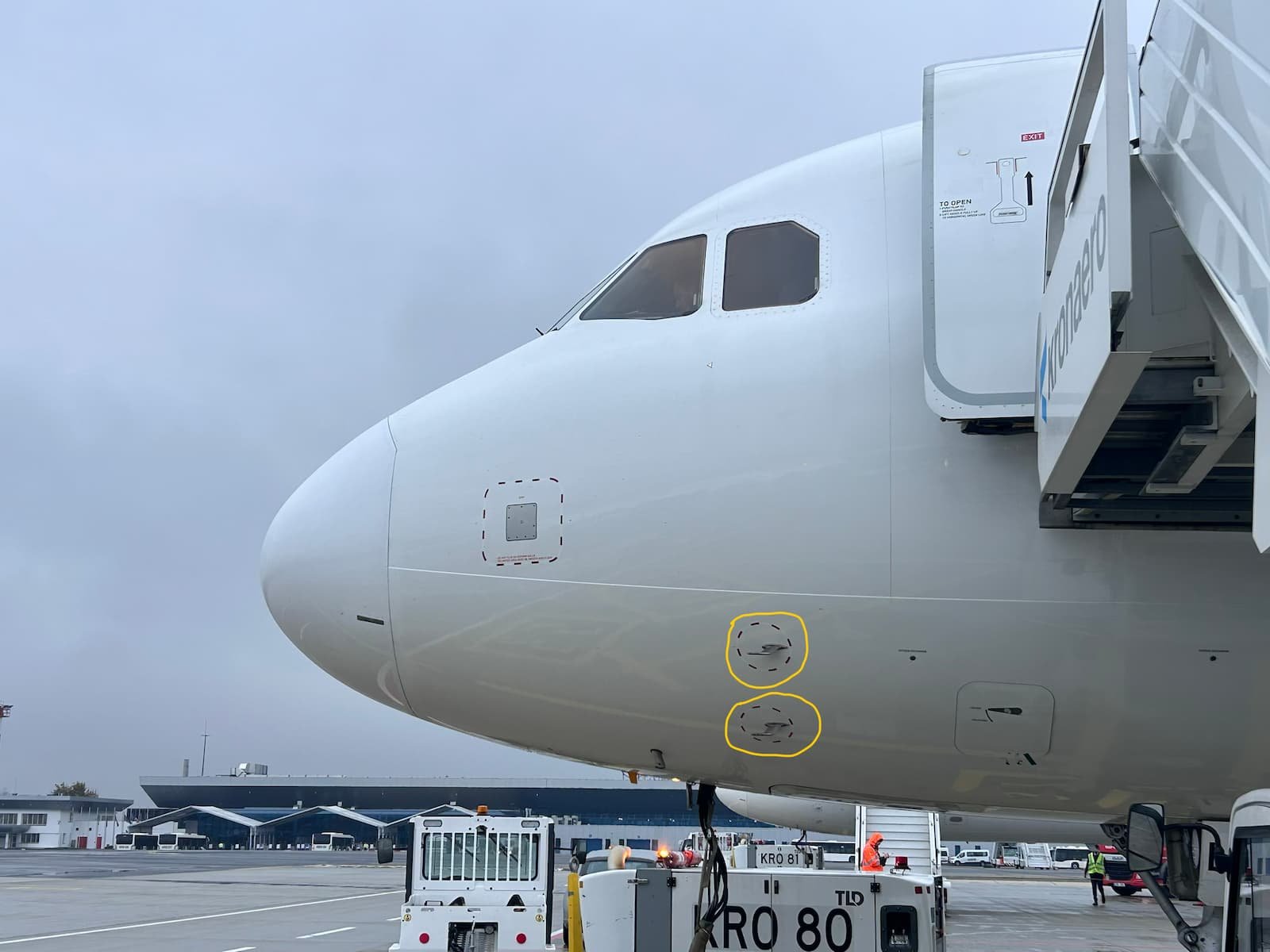
5. What the Image Could — and Could Not — Establish
The episode illustrates a limitation of image-based technical reasoning. A model may recognise the general appearance of an aircraft component while assigning it the wrong function.
Confident explanations about viewing angle, visibility or component placement do not establish that an identification is correct. Manufacturer documentation and component-location diagrams remain the appropriate references for resolving uncertainty.
6. An Investigation That Was Never Planned
There was no prepared test, scoring system or deliberate attempt to mislead the AI systems. The investigation emerged naturally from a practical question and the author's decision to examine answers that did not fit the visible evidence.
The unexpected result was not simply that an AI could make a mistake, but that several rounds of conversation were needed before the original question could be approached more rigorously.