
STS Druzhba: Modernization of the Anchor Handling System Through Precision Engineering Survey
This engineering case documents the modernization of the anchor handling system aboard the Ukrainian training tall ship "Druzhba." The project included an on-board engineering survey, dimensional verification of the existing installation, selection of a modern electro-hydraulic windlass, and successful integration of the replacement equipment while preserving compatibility with the vessel's original bow arrangement.
Introduction & Existing Equipment Assessment
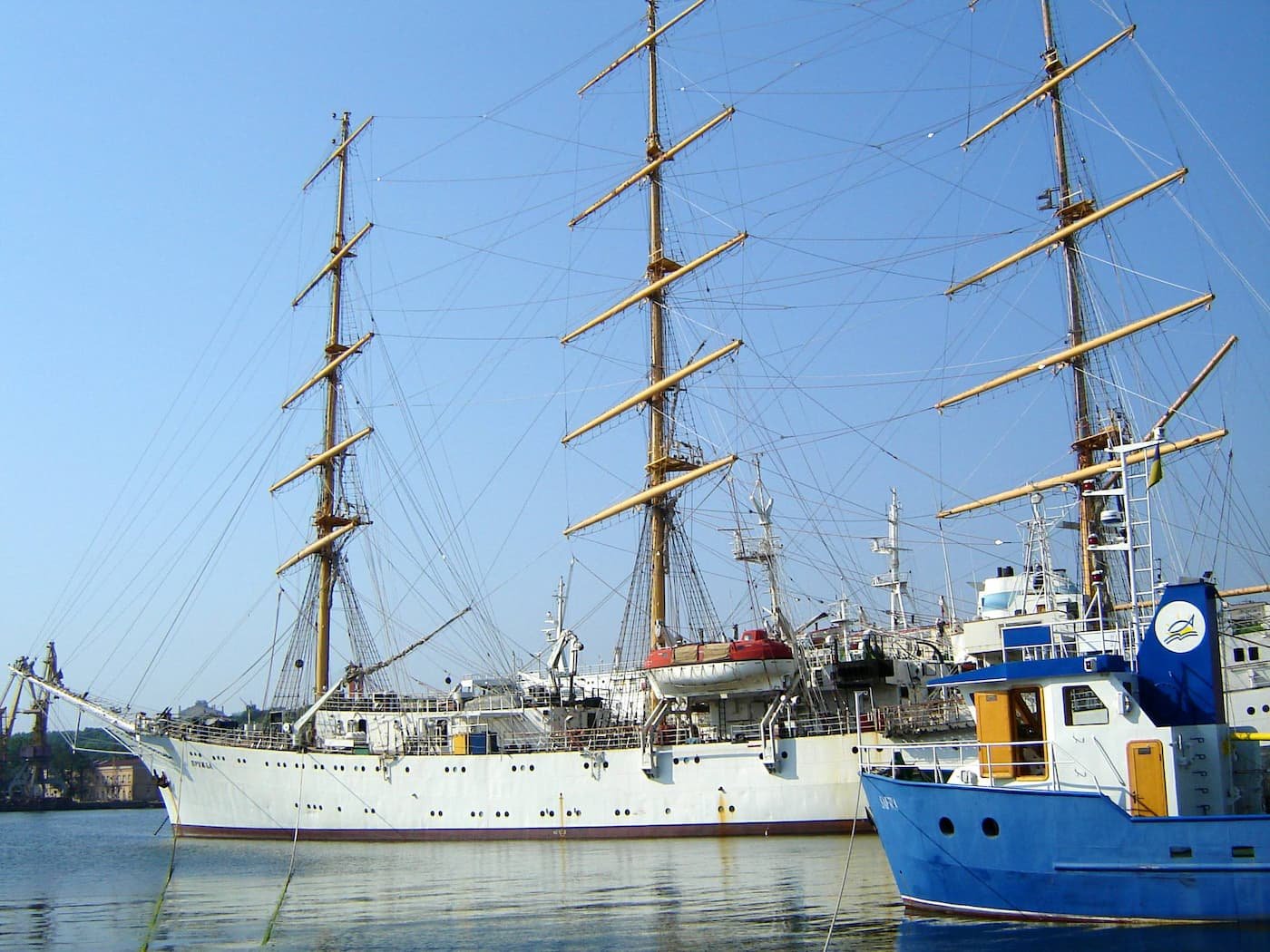
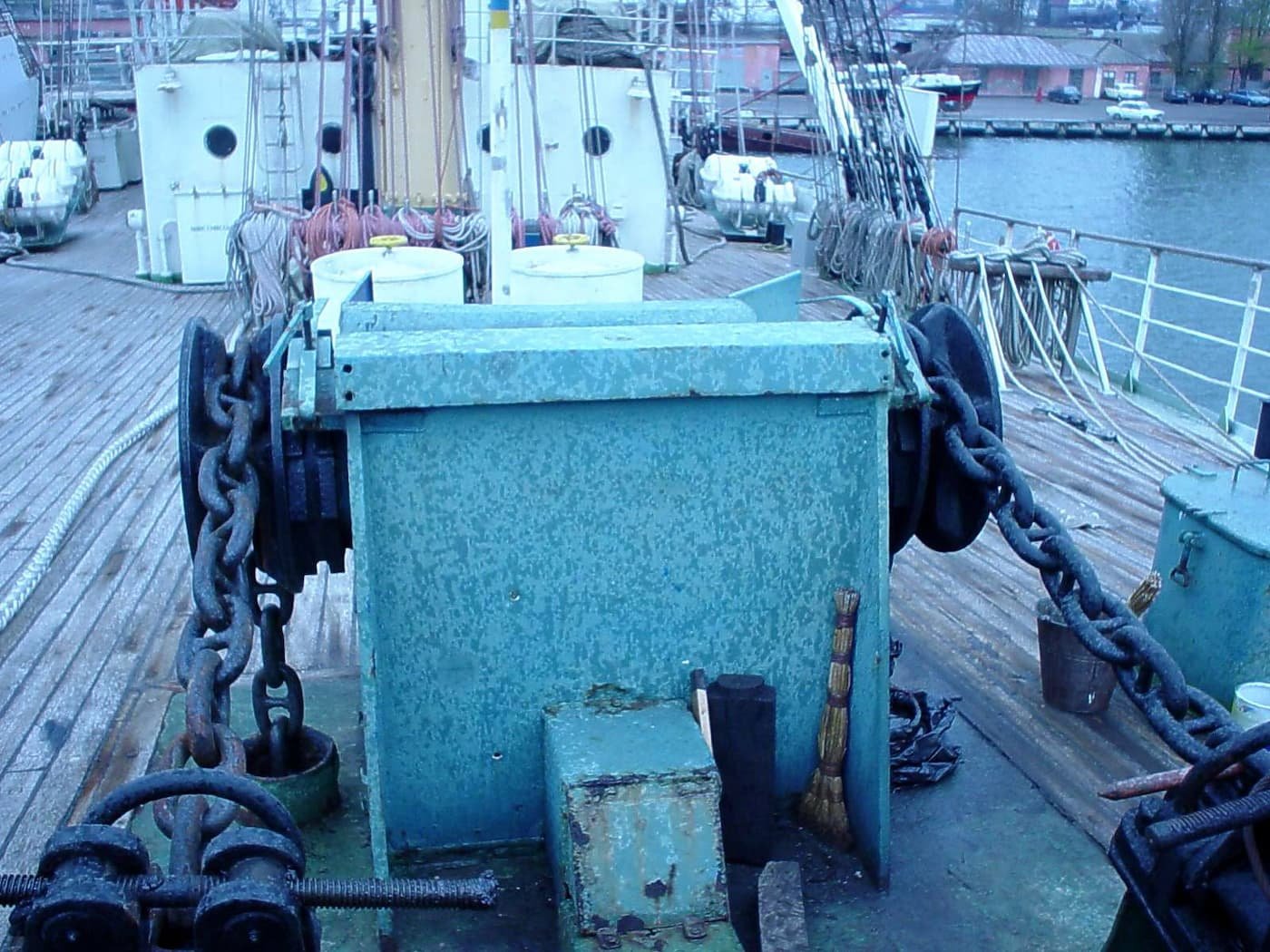
Some engineering projects are remembered not because they were exceptionally complex, but because of the ships on which they were carried out. Around twenty years ago, an anchor windlass modernization project was completed on board the Ukrainian training tall ship "Druzhba." Built to train future merchant marine officers, the vessel represented a different approach to shipbuilding. Unlike commercial cargo ships, every modernization had to fit within an existing design that had served reliably for decades while preserving the vessel's operational capability. The vessel was fitted with an original Polish-built anchor windlass that had reached the end of its operational life. Extensive corrosion had affected the main structural components, making continued operation increasingly unreliable. Before replacement equipment could be selected, it was necessary to understand how the existing installation had been integrated into the vessel and how a modern system could be incorporated without compromising the original arrangement.
Engineering Survey and Dimensional Verification
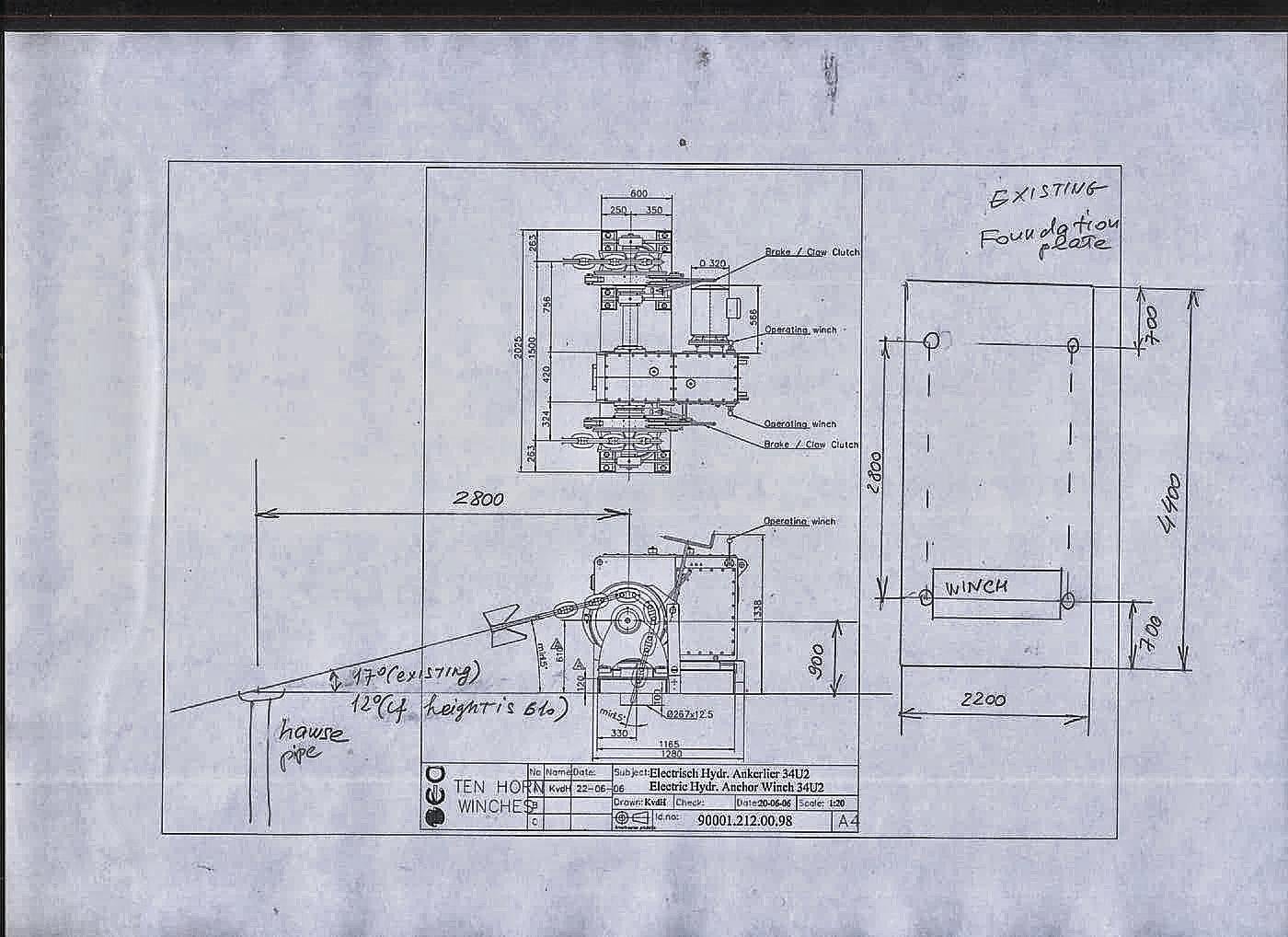
The project began with a detailed on-board survey. Available drawings were reviewed and additional dimensional measurements were taken directly on board. The existing foundation, chain wheel spacing, and anchor chain lead geometry were carefully verified before selecting replacement equipment. Particular attention was given to existing foundation dimensions, anchor chain alignment through the hawse pipes, and compatibility with the existing deck arrangement. The original Polish windlass drawing recorded a chain lead angle of approximately 15° — in actual service, this had reached around 17°. A chain lead angle exceeding 15° is considered unfavourable in anchor windlass practice, as it accelerates wear on the chain wheels and the hawse pipe bore. Due to the difference in height of the proposed windlass, the chain lead angle was reduced to approximately 12°, which required careful verification before the final equipment selection. As a result, the replacement not only modernized the windlass itself but also improved the overall operating conditions of the anchor handling system. The survey was carried out long before laser scanning and digital ship models became commonplace. The replacement equipment was selected using available drawings, on-board measurements, and engineering verification.
Selection of Replacement Equipment
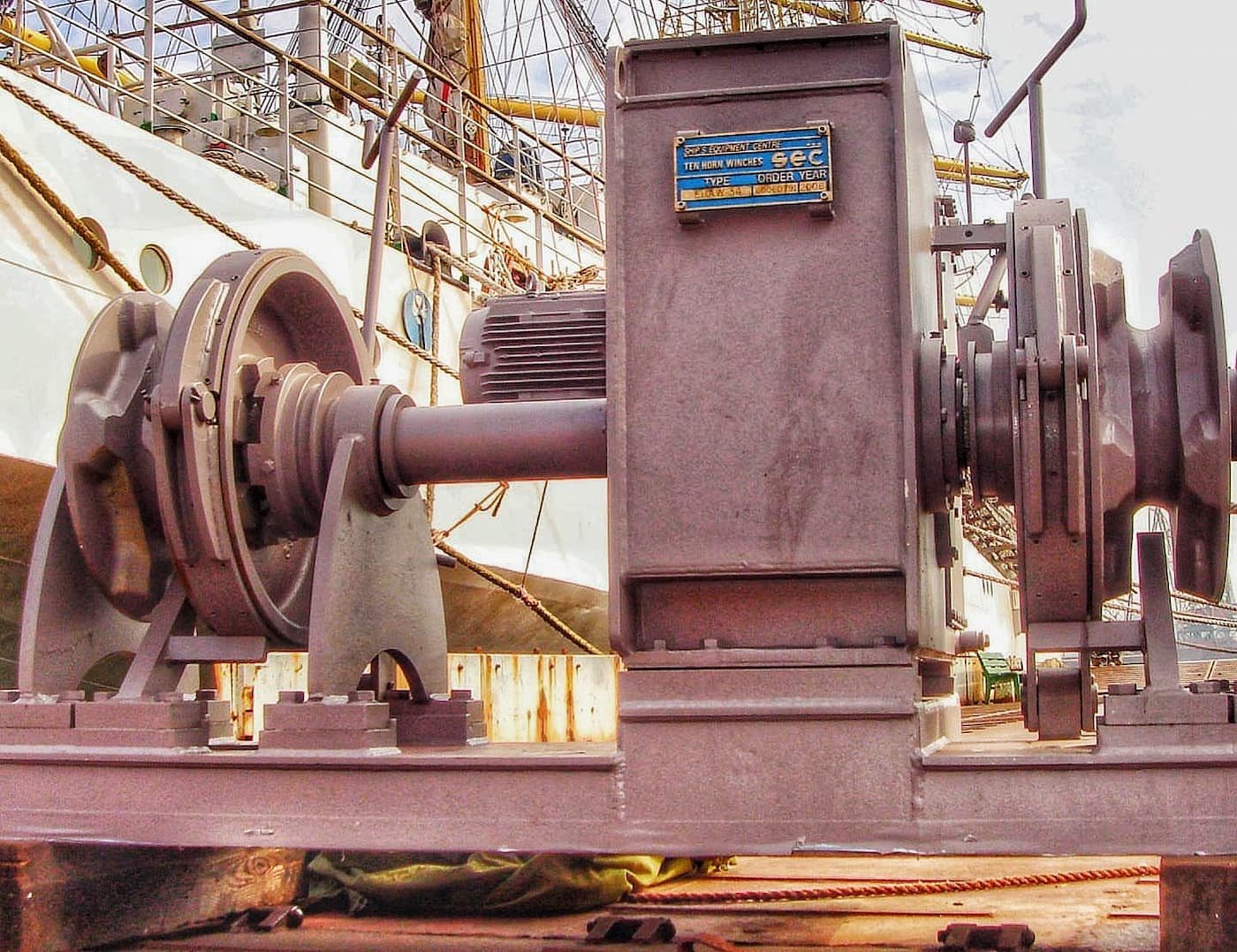
Based on the survey results, a compact electro-hydraulic anchor windlass manufactured by SEC Ten Horn (Netherlands) was selected. The supplied package included an electro-hydraulic drive, an integrated hydraulic power unit, a factory-tested hydraulic system, a closed foundation frame, and Germanischer Lloyd certification. Compared with conventional hydraulic arrangements using separate power packs and external pipework, the integrated design simplified installation and reduced the amount of equipment required on board. This was a critical factor for a sailing ship, as it eliminated the need to route complex hydraulic piping across the historic wooden deck layout.
Installation and Commissioning
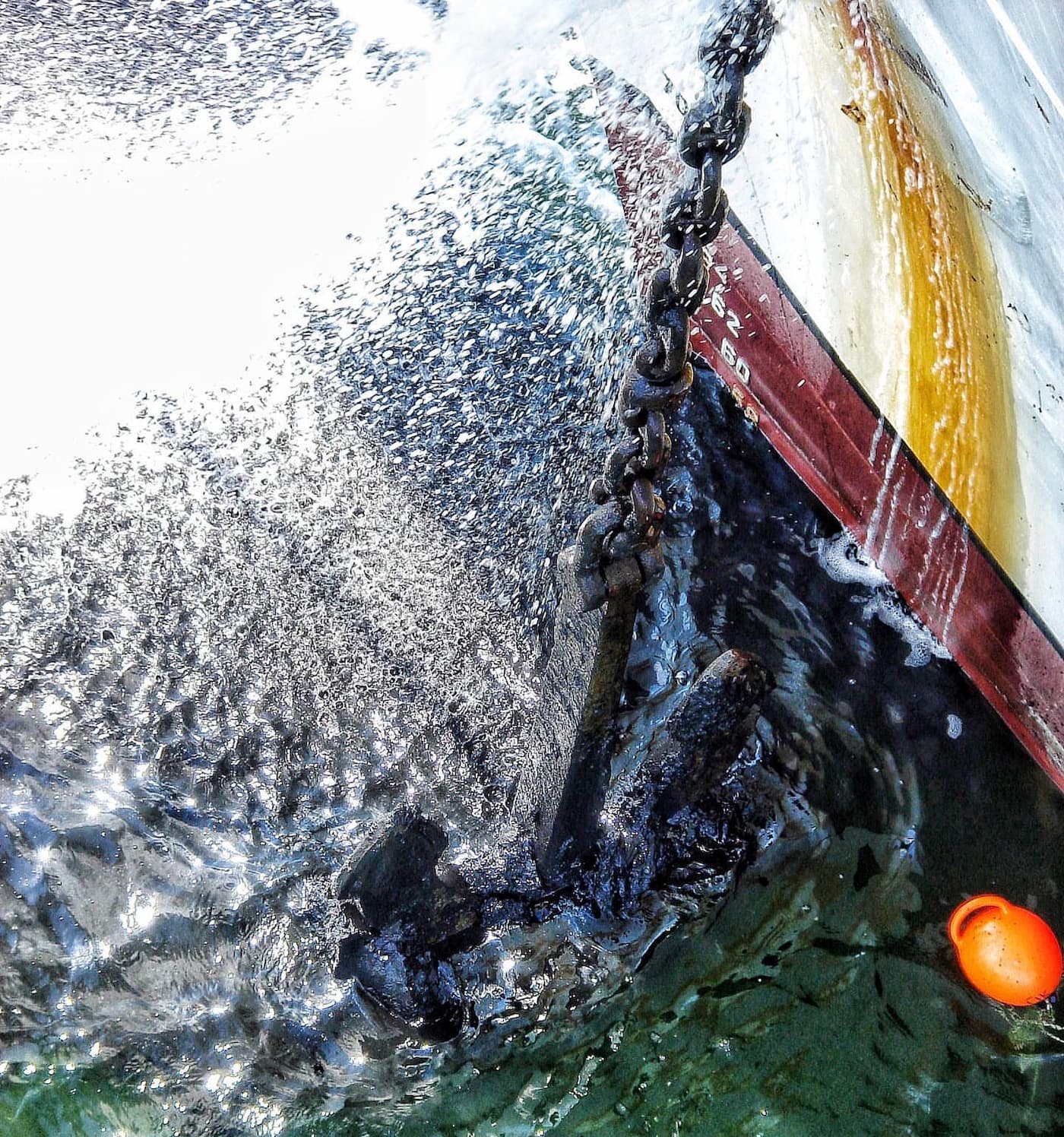
The replacement windlass was delivered alongside the vessel and lifted on board using a floating crane. Installation and commissioning were completed together with the vessel's crew under technical supervision. Following installation, the anchor handling arrangement corresponded precisely with the geometry verified during the survey stage, ensuring that the chain moved correctly through the existing hawse pipes. No major alterations to the overall bow structure or the original foundation plate configuration were required, validating the pre-project manual calculations.
Engineering Validation
From a technical perspective, integrating modern equipment into a historic vessel required careful validation at each stage. Because the replacement unit came from a different manufacturer and era, standard retrofitting procedures were not directly applicable. Early on-board dimensional surveys formed the primary basis for equipment selection and prevented layout mismatches during installation. The original Polish windlass drawing recorded a chain lead angle of approximately 15°, with actual service values reaching around 17° — above the accepted threshold beyond which accelerated wear of chain wheels and hawse pipe bore becomes a concern. The geometry of the new installation reduced this angle to approximately 12°, improving the operating conditions of the anchor handling system as a whole. Selecting a unit with an enclosed foundation frame and an integrated hydraulic loop eliminated the need for external deck pipework, reducing installation complexity and obtaining Germanischer Lloyd approval without additional system modifications.
Looking Back
More than twenty years have passed since this project was completed. The drawings have become part of an archive. The photographs belong to another stage of professional life. The windlass itself is no longer new. Today, "Druzhba" remains alongside her berth in Odessa. Like many historic training ships, her future depends on circumstances far beyond engineering alone. Regardless of what lies ahead, this project became a small part of her long service history. Looking back today, these drawings and photographs preserve more than the memory of a technical project. They document a moment in the life of a remarkable sailing ship and the engineering work that helped keep her in service. Perhaps that is why projects like this remain worth remembering.