
Rapp Hydema TWS-22060: Engineering Identification and Replacement of Hydraulic Drive Motors
This engineering case describes the replacement of hydraulic drive motors installed on a Rapp Hydema TWS-22060 marine winch aboard a vessel built in 2000. Because the original identification plates were no longer available, the replacement could not be performed using catalogue references. Instead, the existing installation was analysed to verify mechanical and hydraulic compatibility before selecting modern replacement motors.
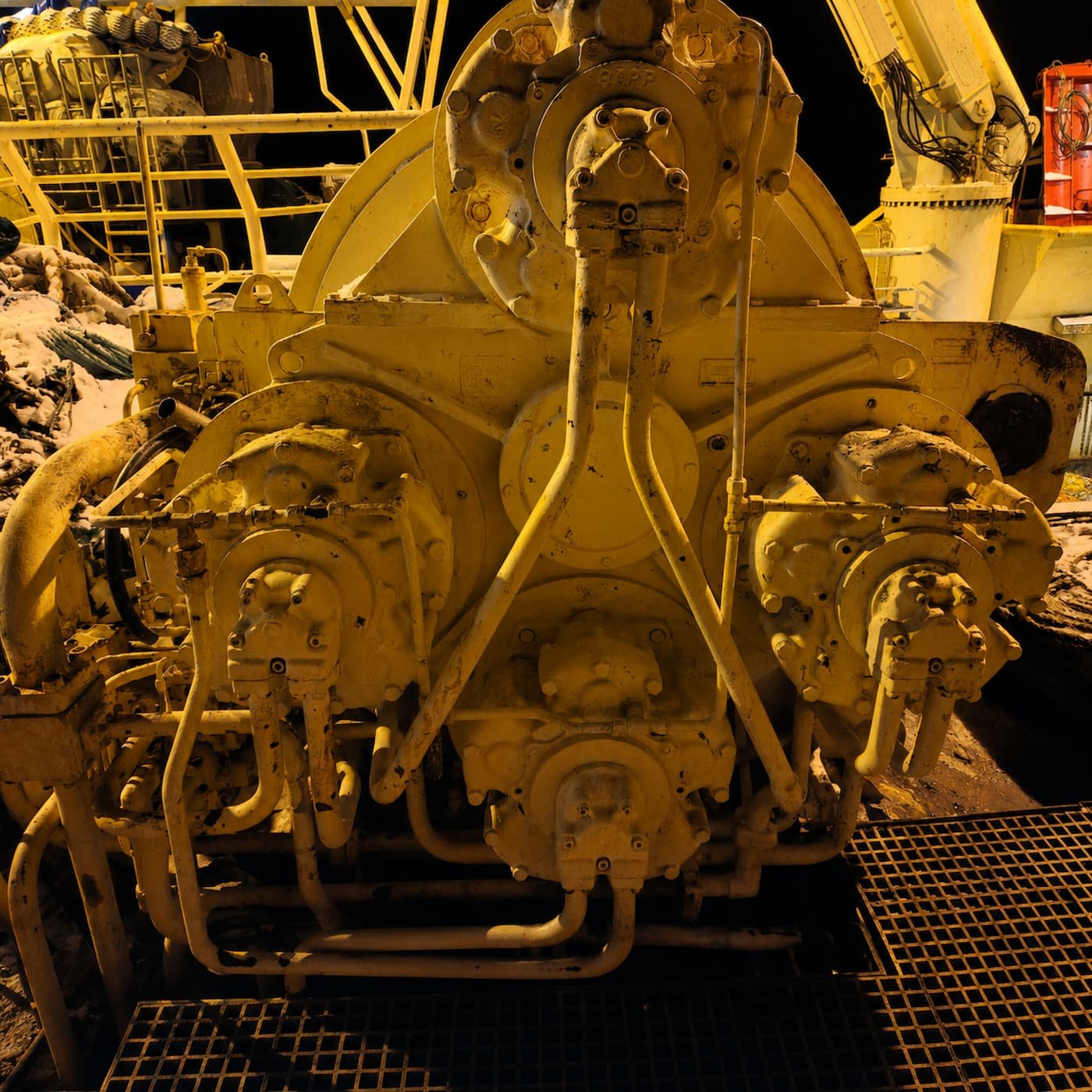
Initial Situation
A vessel built in 2000 required replacement of the hydraulic drive motors installed on a Rapp Hydema TWS-22060 winch. The main difficulty was that the original identification plates were missing, making it impossible to determine the manufacturer or model from the installed equipment.
Engineering Assessment
Two practical options were available. The first was to order replacement motors through the winch manufacturer. The second was to analyse the existing hydraulic motors and identify a compatible modern replacement based on the actual installation. The second approach was selected.
Compatibility Verification
Before selecting replacement motors, the existing installation was evaluated to verify mounting flange dimensions, output shaft configuration, installation geometry, hydraulic port locations and the operating characteristics required by the winch. This ensured that any selected replacement would be mechanically and hydraulically compatible with the existing equipment.
Replacement and Result
Following the engineering assessment, hydraulic motors manufactured in Italy were selected as suitable replacements. The new motors matched the required installation and operating parameters and were installed directly onto the existing winch without modifications to the mounting arrangement or hydraulic pipework.
Prevention
Maintain complete equipment documentation whenever possible and record identification data during scheduled maintenance. Where original markings are unavailable, dimensional inspection and compatibility verification remain the most reliable approach for selecting replacement components.